


The Government has recently issued Decree No. 319/2026/ND-CP detailing regulations on journey
monitoring devices, audio-visual recording devices for drivers, and passenger compartments on road
transport vehicles. This is a crucial step toward tightening transport safety management, with a key
highlight being the requirement for devices to integrate artificial intelligence (AI) for the automated
analysis of driver behavior.
Below is a summary of the most notable contents regarding timelines, vehicle types, and equipment
requirements under the new regulations.
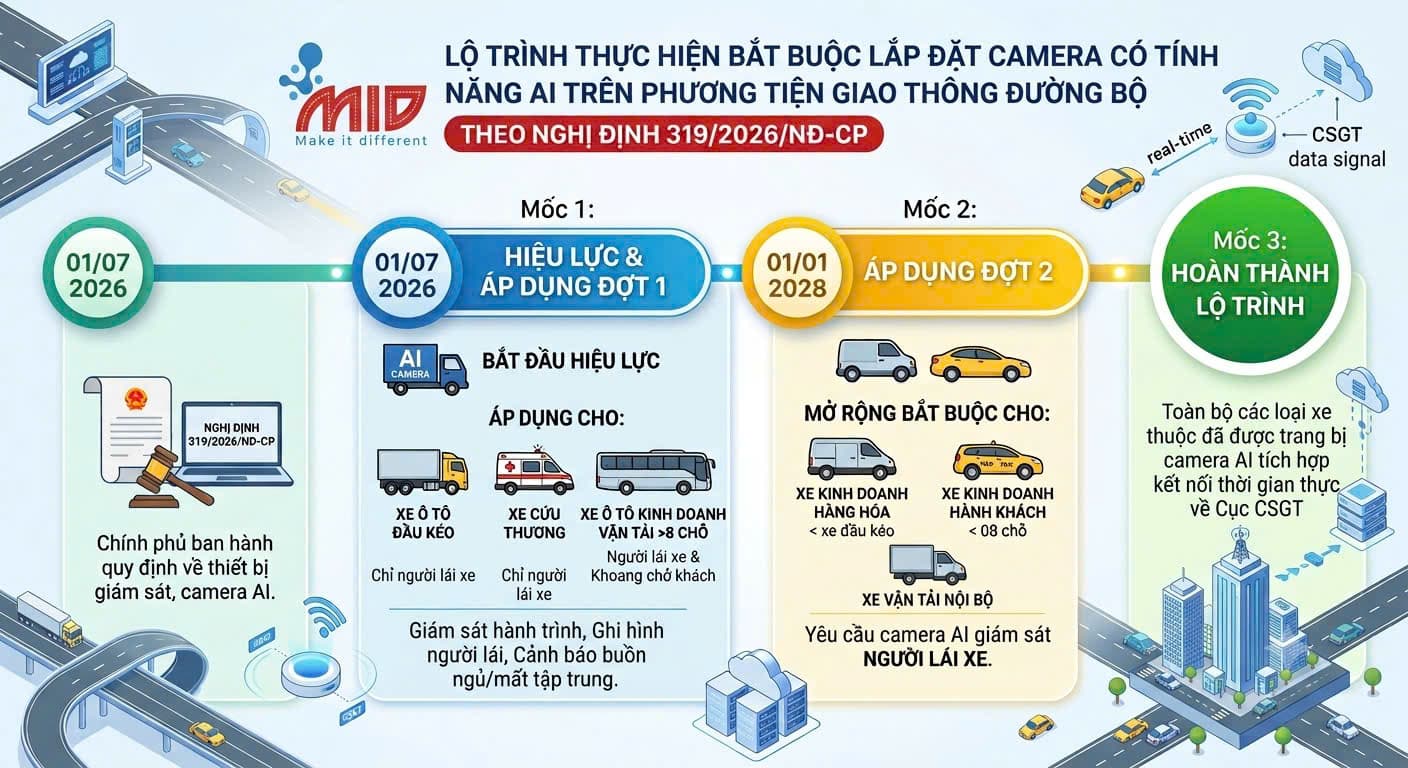
1. Implementation Effect and Application Timelines
The Decree officially takes effect from July 1, 2027. However, provisions mandating device installation
are structured according to a specific implementation roadmap to allow transport operators adequate
time for preparation.
* Milestone 1: From July 1, 2027 (Upon the Decree taking effect)
Mandatory implementation of regulations regarding the installation and real-time data transmission
for vehicle groups previously subject to monitoring device requirements, including:
• Commercial freight and passenger transport automobiles.
• Tractor trucks.
• Ambulances and road traffic rescue vehicles.
* Milestone 2: From January 1, 2028 (Expanded implementation roadmap)
This is a critical milestone for newly added vehicle categories mandated to install Driver Recording
Devices (Driver Monitoring Cameras). Specifically:
• Commercial passenger transport automobiles with fewer than 08 seats (excluding the driver's
seat) – e.g., taxis and ride-hailing vehicles with fewer than 8 seats.
• Commercial freight transport automobiles (excluding tractor trucks covered in the previous
phase).
• Internal transport vehicles operating on roads.
2. Mandatory Requirements for Behavioral AI Analysis (Core New Feature)
The most notable highlight lies in the Technical Requirements for the devices. No longer limited to
passive recording and data transmission, the new regulation requires the equipment to possess
"intelligence".
According to the Decree, vehicle monitoring devices must feature automatic detection and automatic
safety warning capabilities regarding law violations or unsafe acts committed by drivers.
Specifically, devices must employ automated image/data analysis technology (Artificial Intelligence – AI)
to identify behaviors such as:
a) Distracted driving: Drivers using mobile phones, turning their backs forward, or looking away
from the road for extended periods.
b) Fatigue and drowsiness: Detected through blinking frequency, head posture, and nodding off.
c) Other subjective traffic law violations: Specific behaviors specified under the National Technical
Regulations issued by the Minister of Public Security.
3. Regulations on Data Transmission and Storage
The Decree tightens data transmission protocols to ensure "real-time" oversight by regulatory
authorities.
Data Transmission: Journey data, driver images, and passenger compartment images (for standard
passenger vehicles) must be continuously transmitted to the service provider server, and subsequently
synchronized with the server of the Traffic Police Department (CSGT) in real time. Violation data must
be prioritized for immediate transmission.
Storage Duration:
• On the device: Minimum of 30 days.
• On the service provider server: Minimum of 01 year for general data, minimum of 03 months for
violation data.
• On the Traffic Police Department server: Minimum of 03 years.
Recommendations for Transport Enterprises and Vehicle Owners
The issuance of detailed regulations demonstrates the Government's determination in driving digital
transformation and elevating road traffic safety standards to minimize accidents caused by driver error.
To ensure compliance with the roadmap (especially the January 1, 2028 milestone for taxis, light trucks,
and internal transport vehicles), enterprises and vehicle owners should:
• Thoroughly study the application roadmap relevant to their operational vehicle types.
• Source and equip journey monitoring devices and driver cameras that comply with the latest National
Technical Regulations, ensuring certified integration of standardized behavioral AI analysis capabilities.






%20(1).png&w=3840&q=75)