



5 Important Notes When Using RFID Driver Cards
RFID driver cards are increasingly used in transportation companies, buses, coaches, trucks, and container fleets due to their fast identification capability, high accuracy, and easy integration with management systems.
However, many cases of card failure, unstable reading, or early damage occur because of improper usage or handling.
Here are the 5 most important notes:
1. The GPS tracking device must meet regulatory standards
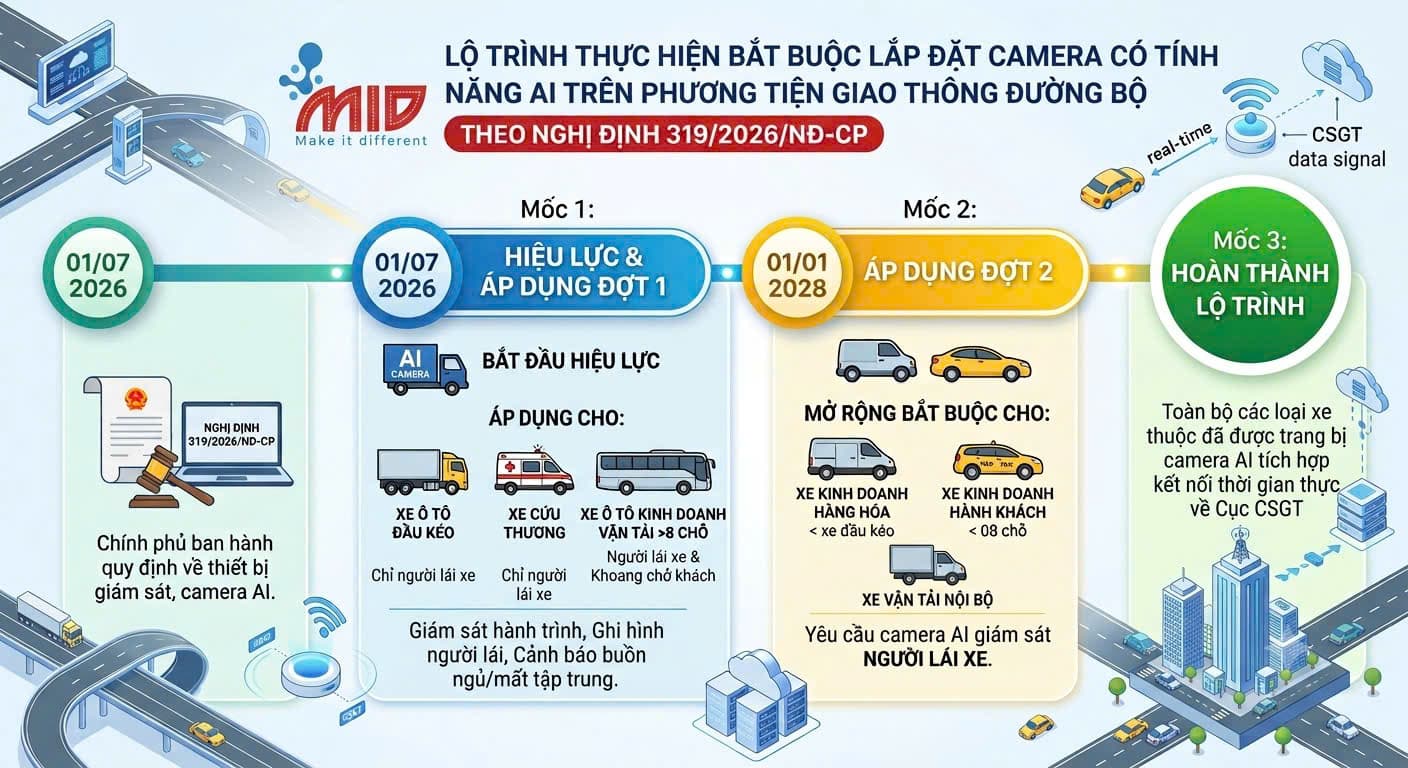
Commercial transport vehicles must use tracking devices certified under QCVN 31:2014/BGTVT to record and transmit complete data such as speed, location, engine status, and driving time to the Directorate for Roads of Vietnam.
MID Vietnam provides full consultation and installation of compliant devices.
2. Use system-compatible RFID – NFC cards
- Commercial vehicles must use RFID cards compliant with ISO/IEC 15693.
- Supports access control at airports, ports, ICDs, and warehouses.
- Ensures valid login/logout on the in-vehicle RFID reader.
- Automatically logs driving time into the GSHT system according to regulations.
- Some HF 13.56 MHz cards can be checked via NFC phone scanning.
- Fully compatible with MID Vietnam’s RFID readers.

➡ Non-standard cards may result in slow reading, errors, or complete failure to read.
3. Each card stores only one driver’s data at a time
- Each RFID card is assigned to one driver and contains only that driver’s information.
- Drivers must log in and log out correctly when starting or finishing a trip.
- Sharing or lending the card is not allowed.
- The system only records the driver who taps the card at that moment.
4. Do not bend, fold, or place heavy objects on the card
The internal RFID antenna is thin and easily damaged when:
- Sitting on the card while it’s in a pocket
- Storing it with heavy items in a bag
Consequences:
- The card can no longer be read
- Permanent damage, not repairable

5. Check the device regularly to ensure stable operation
The tracking device must maintain stable GPS and 4G signals and consistent power supply.
Drivers and technicians should perform routine checks before trips to avoid login issues.
Conclusion – Recommendations from MID Vietnam
To maintain stable and reliable RFID card performance:
✔ Use standard RFID – NFC cards
✔ One driver per card
✔ Do not bend or compress the card
✔ Perform regular device checks
MID Vietnam’s RFID cards help reduce reading errors, improve reliability, and ensure synchronized data throughout the system.





%20(1).png&w=3840&q=75)